

Primary Keywords: sensory-integrated playgrounds
How Sensory-Integrated Playgrounds Help Neurodivergent Children Build Confidence Through Play
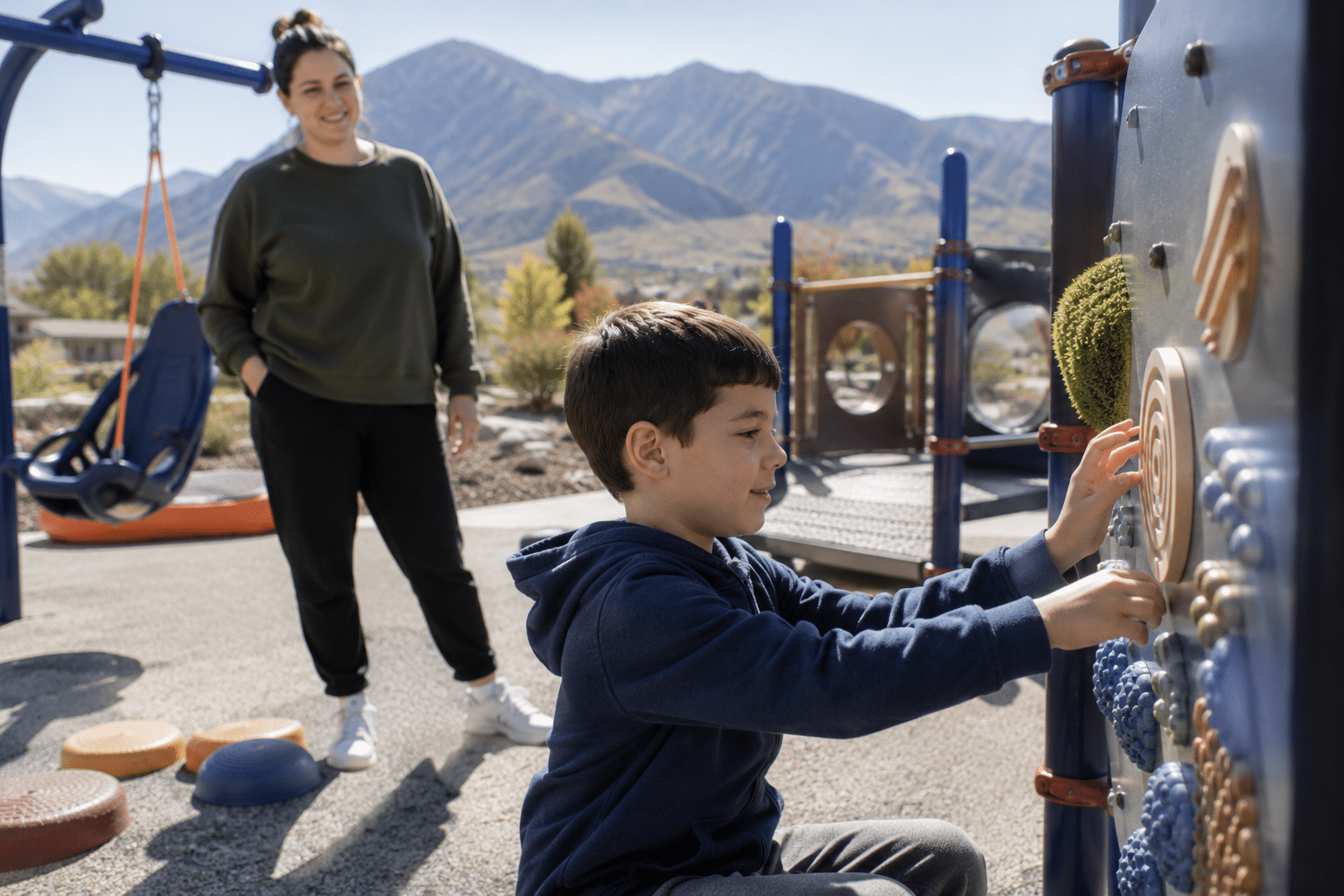
For many children, a trip to the playground is a simple run toward the swings, climb something tall, find another child to play with, and head home tired. For neurodivergent children, that same environment can be much harder to navigate. Noise, crowds, unfamiliar equipment, unpredictable movement, and limited places to retreat can turn play into an overwhelming experience.
That doesn’t mean a child doesn’t want to explore, move, or connect. Sometimes, the environment simply has not been designed with their needs in mind.
At Bridgeway Connections, supporting neurodivergent families in Utah means looking beyond clinical care and addressing the everyday barriers that affect a child’s ability to participate in community life. Sensory-integrated playgrounds are one example of how thoughtful spaces can give children more opportunities to explore on their own terms, practice independence, and gradually build confidence through play.
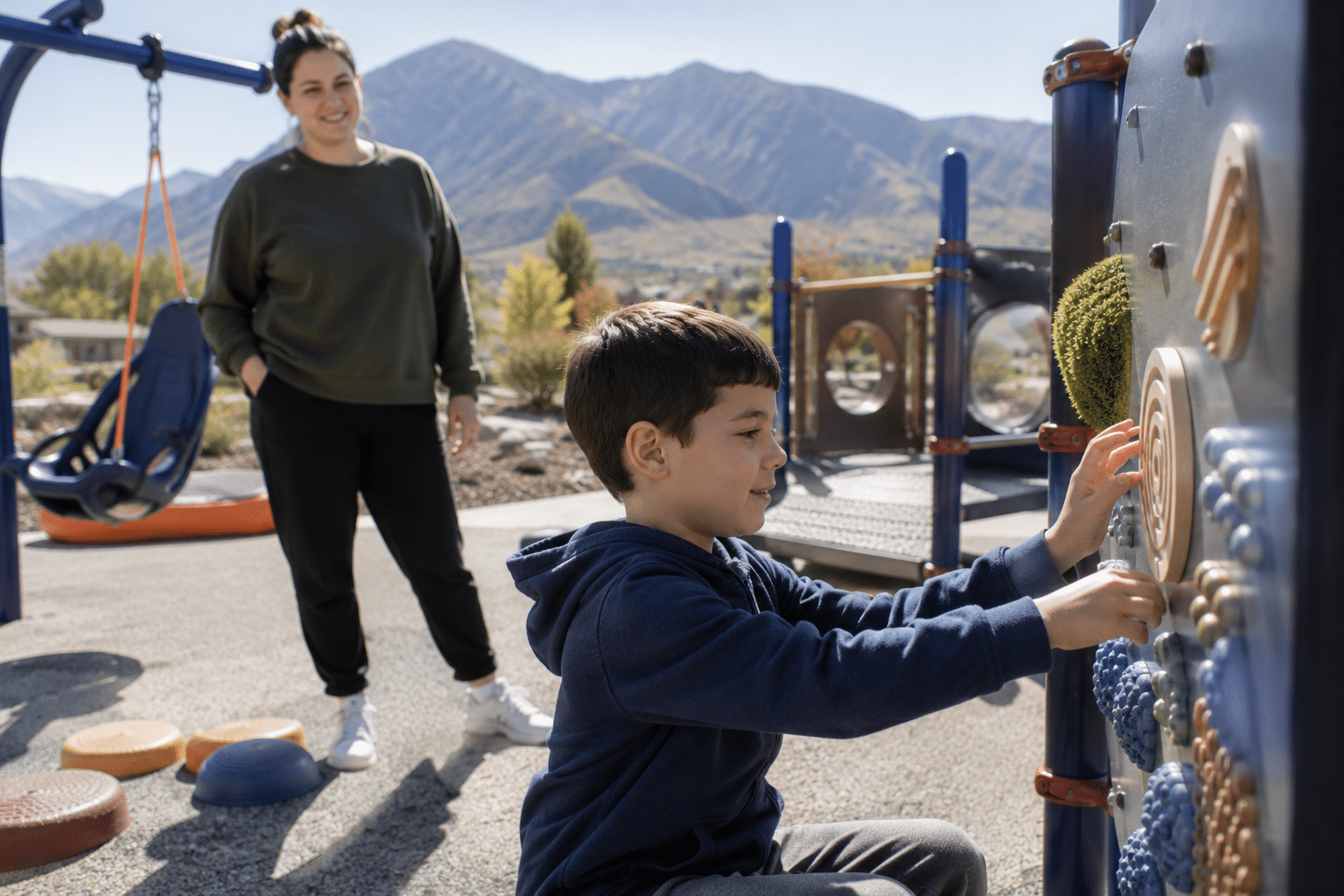
What Is a Sensory-Integrated Playground?
A sensory-integrated playground includes different types of play experiences so children are not limited to one way of participating.
Instead of relying only on traditional slides, monkey bars, and swings, these spaces may include:
- Tactile panels and textured surfaces
- Different types of swings and movement equipment
- Spinning, rocking, and balancing features
- Musical or interactive elements
- Sand, water, or nature-based play
- Accessible pathways and equipment
- Open spaces for running and movement
- Quieter areas where children can step away from activity
The goal is not to create a playground exclusively for autistic or neurodivergent children. Ideally, the space allows children with different abilities, sensory preferences, communication styles, and comfort levels to participate alongside one another.
Research supports this broader approach. A scoping review examining 35 studies on inclusive playground design found that meaningful inclusion depends on more than simply making equipment physically accessible. Researchers recommended entrances, surfaces and pathways, play features, supervision, and participation from families and disability communities during the design process.
Play Gives Children a Chance to Make Their Own Choices
Children spend much of their day following instructions.
Get dressed. Get in the car. Sit here. Wait there. Try this. Stop doing that.
For families managing therapy appointments, school accommodations, transportation, and other responsibilities, schedules can become especially structured.
Play can offer something different: choice.
A child can decide whether to swing, climb, watch another child, touch a sensory feature, run across an open area, or simply sit nearby until they feel comfortable.
These choices may look small to an adult, but they give children opportunities to experience, decide what to do, try it, and handle what happens next.
Confidence does not always arrive through a dramatic breakthrough. Sometimes it develops through dozens of small experiences in which a child becomes more familiar with their environment.
Sensory-Friendly Choices Can Make Exploration More Manageable
Every neurodivergent child is different.
One child may actively seek movement and enjoy swinging, jumping, climbing, or spinning. Another may find intense movement uncomfortable. Some children love tactile experiences, while others avoid particular textures. A busy group of children may energize one child and overwhelm another.
That is why variety matters.
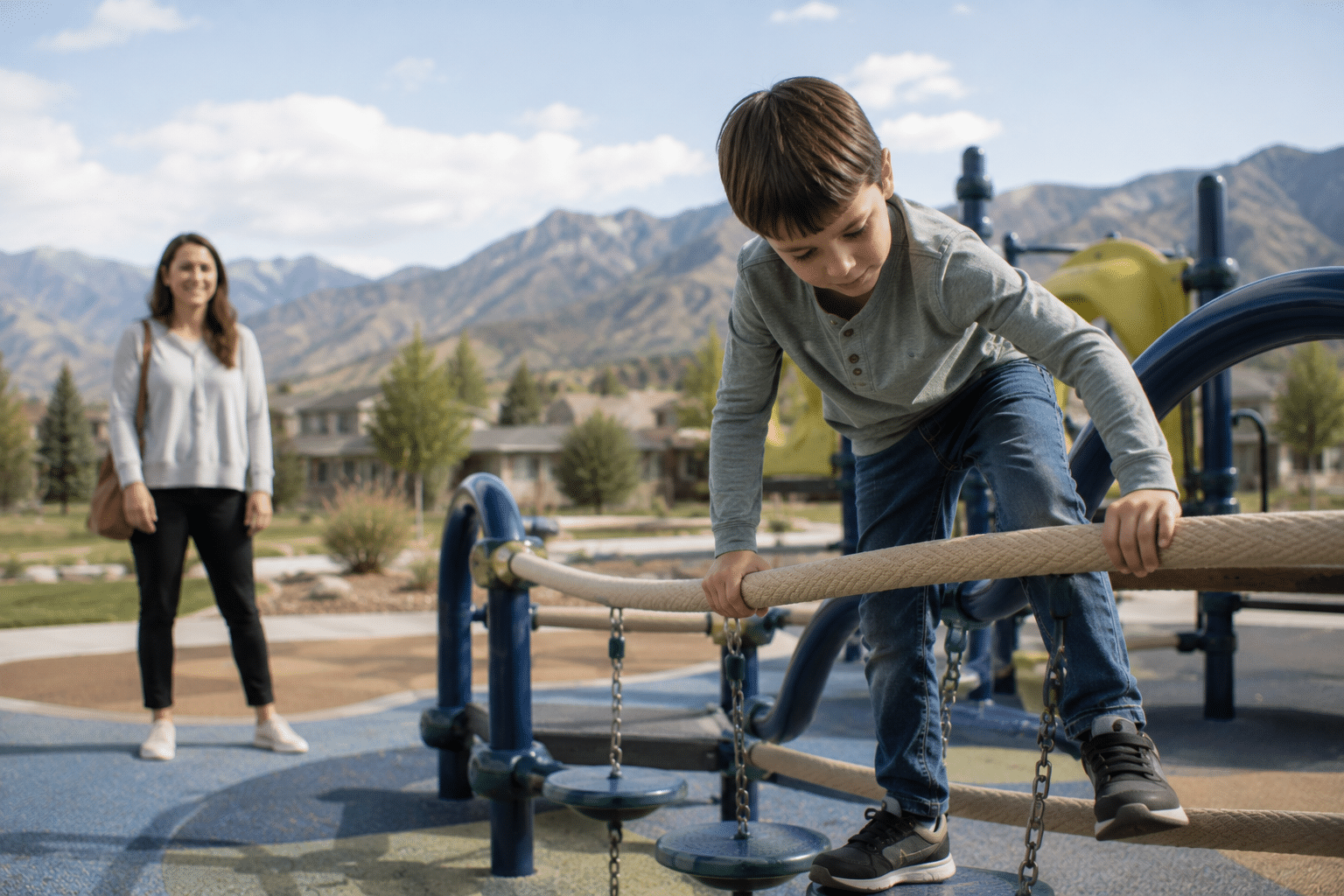
A sensory-integrated playground can offer multiple ways to engage instead of expecting every child to use the space the same way. A child who does not want to join a busy climbing structure might start with a quieter activity and explore something more challenging later.
Research on inclusive playgrounds emphasizes this distinction between accessibility and true inclusion. An environment can be technically accessible without giving every child meaningful opportunities to participate, interact, and feel they belong.
For parents searching for sensory-friendly activities for kids in Utah, this is an important consideration. The question is not simply, “Can my child enter this playground?” It is also, “Does my child have meaningful choices once they are here?”
Confidence Can Grow Through Self-Directed Challenges
Playgrounds naturally create manageable challenges.
- Can I climb one step higher?
- Can I cross this bridge?
- Can I try the swing again?
- Can I approach those children?
When children control the pace, these experiences can become opportunities to practice persistence and problem-solving without turning play into another assignment.
Importantly, building confidence does not mean forcing children into uncomfortable situations. A child watching from the edge is still learning about the environment. A child returning to the same familiar activity may be establishing a sense of safety before trying something different.
Parents do not need to measure a successful playground visit by how many pieces of equipment their child used.
Success might simply mean that their child felt comfortable enough to explore.
Inclusive Playgrounds Can Create Natural Opportunities for Connection
Playgrounds also create opportunities for children to interact without conversation as the starting point.
Two children might swing beside each other, take turns with equipment, build something in sand, chase each other, or simply play independently in the same space.
A naturalistic observational study of an inclusive playground found that 71% of observed children engaged in active play, while many social interactions occurred with peers or adults. Researchers concluded that intentionally inclusive playgrounds can support different forms of play and social interaction.
However, equipment alone cannot guarantee inclusion.
A 2025 mixed-methods study involving 63 children found that physical surroundings, peer relationships, familiarity, and adult support all influenced inclusive outdoor play. Children with disabilities still encountered physical and social barriers in supposedly inclusive settings.
For Utah communities, this means building a truly neurodivergent family community in Salt Lake City, St. George, and elsewhere requires more than installing specialized equipment. Families also need spaces that understand and welcome different communication styles and ways of playing.
Sensory-Friendly Spaces Help the Whole Family Participate
A playground experience affects caregivers, too.
Parents of neurodivergent children often perform an enormous amount of invisible planning. Before visiting somewhere new, they may be thinking about parking, crowds, bathrooms, food, transportation, potential sensory triggers, safety, and what happens if their child becomes overwhelmed.
An inclusive environment cannot eliminate every challenge, but thoughtful design can remove some unnecessary ones.
Clear pathways, quieter spaces, varied equipment, seating, accessible facilities, and room for children to regulate before returning to play can make outings more manageable.
This is an important part of addressing autism caregiver burnout: communities should not expect families to overcome every environmental barrier on their own.
Utah Communities Can Make Play More Inclusive
Creating better play opportunities does not require assuming every neurodivergent child has identical needs. In fact, it requires the opposite.
Families should be included in conversations about what local children actually need.
Schools, businesses, nonprofits, municipal leaders, and community organizations across Utah can support sensory-friendly spaces by listening to neurodivergent children and their caregivers, improving existing recreational spaces, supporting inclusive community events, and funding environments that offer multiple ways to participate.
For parents, it can also help to visit new playgrounds during quieter hours, preview unfamiliar spaces when possible, bring familiar comfort items, and allow children to decide how quickly they want to explore.
There is no single “correct” way to play.
Building More Opportunities for Utah’s Neurodivergent Children
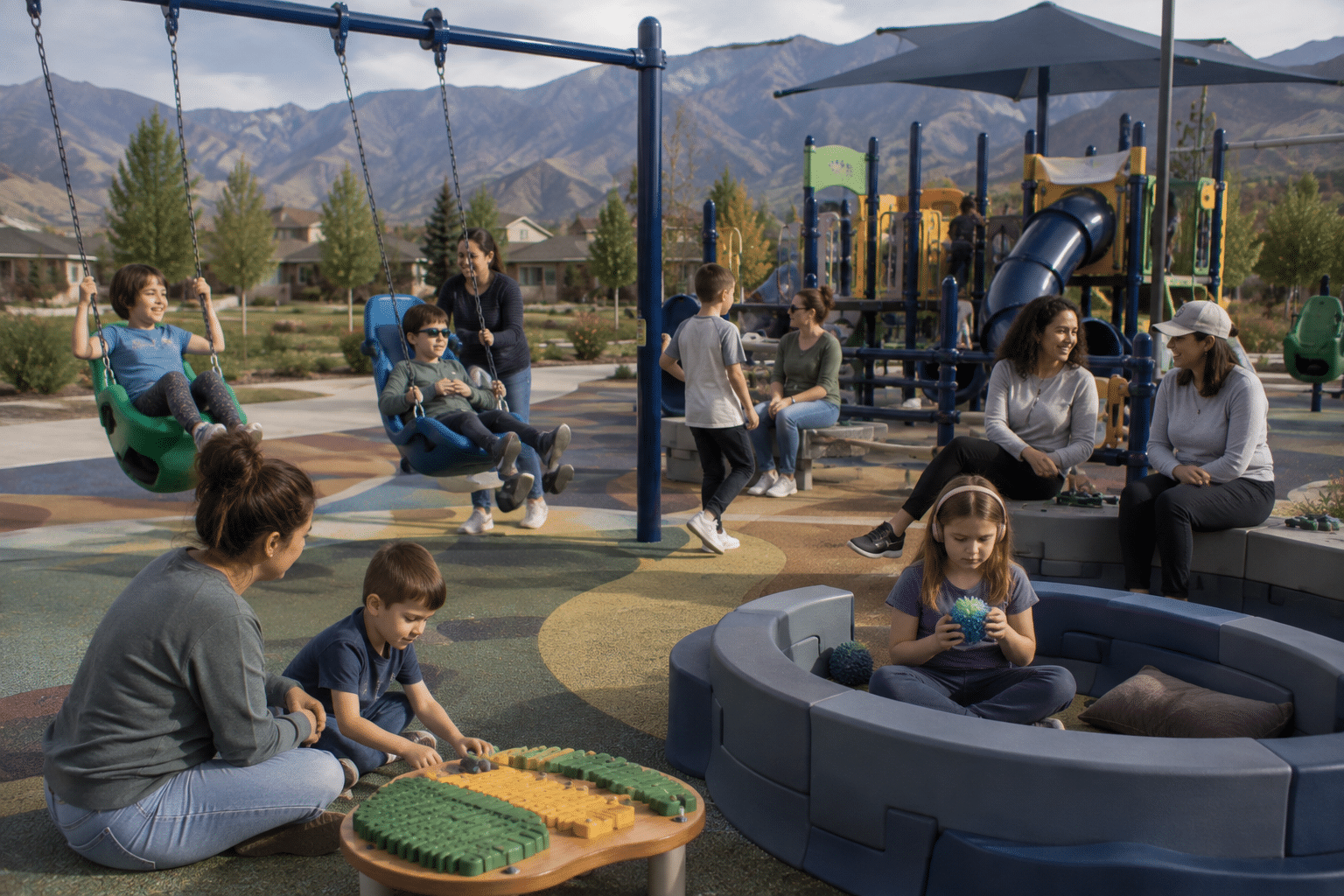
A sensory-integrated playground cannot remove every challenge a neurodivergent family faces. But it can remove one more barrier between a child and an ordinary childhood experience: having somewhere they can simply play.
Bridgeway Connections works to remove the non-clinical roadblocks that can prevent Utah youth with autism and other neurodivergent needs from accessing care and participating more fully in their communities. From sensory-friendly spaces to transportation and food insecurity support, the focus is on practical barriers that families should not have to navigate alone.
Learn more about Bridgeway Connections, available resources, and opportunities to support neurodivergent families throughout Utah at Bridgeway Connections.
